
Photodynamic Therapy (PDT) & Blue Light in Wellesley, MA
Conveniently located to serve Wellesley, Boston, Weston and Greater Boston Area. New Patient & Urgent Same Day Appointments Available.

Treat actinic keratoses and sun-damaged skin with Photodynamic Therapy at Premier Dermatology
Years of sun exposure can leave behind more than visible discoloration. Actinic keratoses are rough, scaly areas of sun-damaged skin that can develop after cumulative ultraviolet sun exposure and may become skin cancers over time.
At Premier Dermatology in Wellesley, MA, Dr. Melissa Burnett and her team evaluate your skin and determine whether photodynamic therapy is an appropriate option for treating actinic keratoses and sun-damaged skin.
What Is Photodynamic Therapy?
Photodynamic therapy (PDT) is a medical treatment for actinic keratoses and certain areas of sun-damaged skin that combines a photosensitizing medication with controlled light exposure. The medication is applied to the treatment area and preferentially absorbed by the pre-cancerous cells. A specific wavelength of light is then used to activate the medication, triggering a reaction that damages those cells.
PDT can be particularly useful when multiple actinic keratoses are present within the same region of sun-damaged skin. Instead of treating only one visible lesion at a time, photodynamic therapy addresses a broader treatment field providing better results by treating the active pre-cancers as well as pre-clinical damage that is not yet visible.

Benefits of Photodynamic Therapy
Photodynamic therapy can be a useful treatment option when actinic keratoses develop across an area of chronically sun-damaged skin. Rather than focusing only on individual visible spots, PDT can treat a broader field of abnormal skin.
Potential benefits include:
- Treats multiple actinic keratoses: PDT can address several lesions within the same treatment area during a single session.
- Targets a broader area of sun damage: Treatment can address clinically visible actinic keratoses as well as preventatively treat areas of abnormal skin or “pre-clinically” atypical cells..
- Provides a nonsurgical treatment option: PDT does not require surgical excision of each treated lesion.
- Can be used on commonly sun-exposed areas: Depending on the condition being treated, PDT may be appropriate for areas such as the face, scalp, neck, chest, or arms.
- Treats rather than simply conceals sun damaged skin: PDT is a medical treatment directed at abnormal cells associated with actinic keratoses and sun-damaged skin.
- Can be incorporated into ongoing skin care: Patients with recurrent actinic keratoses or a history of skin cancer may benefit from discussing PDT and other treatment options with their dermatologist as part of long-term skin surveillance and skin cancer prevention.
The benefits and expected response vary based on the extent of sun damage, number and characteristics of lesions, treatment area, and individual skin response. A dermatologic evaluation can determine whether photodynamic therapy is appropriate for you.
Who Is a Candidate for Photodynamic Therapy?
Photodynamic therapy may be appropriate for adults with multiple actinic keratoses or areas of sun-damaged skin, particularly when several lesions occur within the same treatment area.
You may be a candidate if you:
- Have multiple or recurring actinic keratoses
- Have sun damage across a broad area
- Have a history of skin cancer
- Want a nonsurgical treatment option for appropriate lesions
- Can follow post-treatment light protection instructions
Our board certified Dermatologists will evaluate your skin, medical history, and previous treatments to determine whether PDT is appropriate for you.
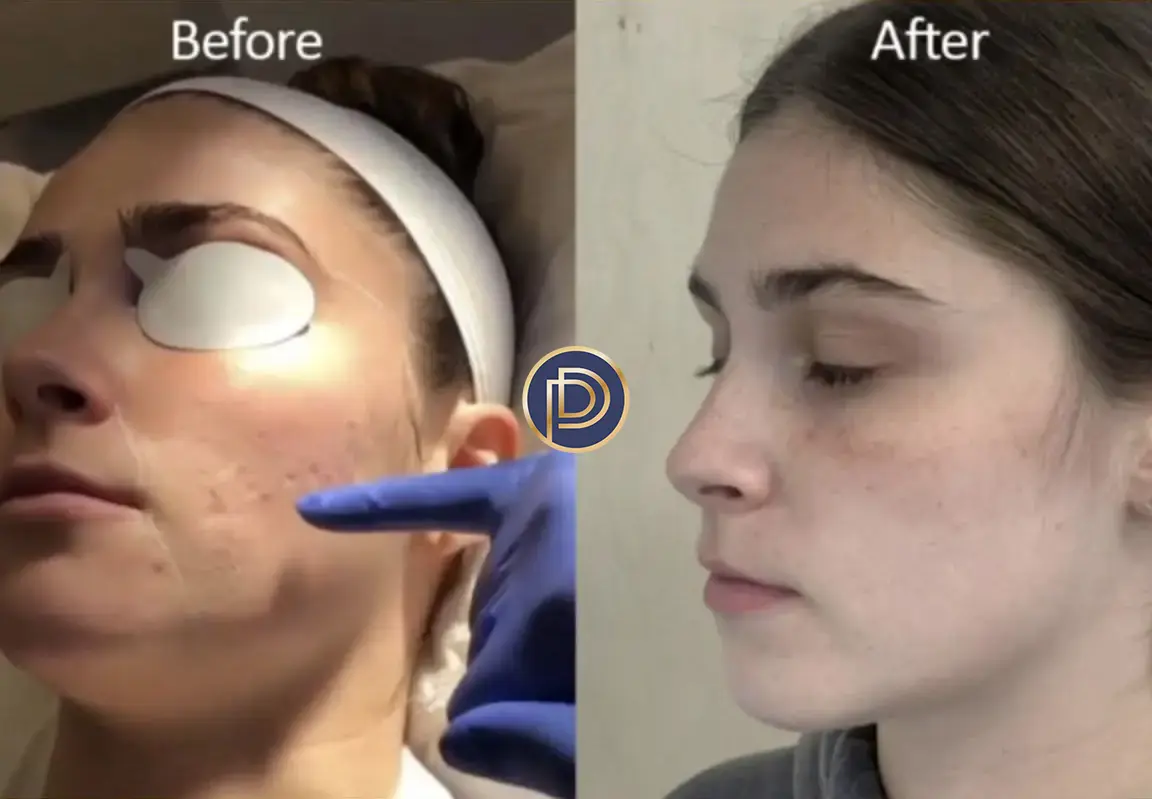
Before & After
How Photodynamic Therapy Works
Photodynamic therapy uses a photosensitizing medication and a specific light source to target abnormal cells within sun-damaged skin. The treatment is performed in stages, allowing the medication to be absorbed before it is activated by light.
- Skin preparation: The treatment area is cleansed and prepared so the photosensitizing medication can be absorbed effectively.
- Photosensitizing medication: A light-sensitive medication called aminolevulinic acid is applied to the affected skin. It is absorbed preferentially by the more metabolically active pre-cancerous cells within the treatment area.
- Medication activation: The medication is allowed to absorb for about 1 hour. You are then positioned under the U-shaped device, often called the “Blue-U”, and exposed to the activating wavelength typically 410-420nm. This creates an inflammatory response targeted in the pre-cancerous cells.
- Healing: Following treatment, the treated skin will appear red and blotchy. This temporary inflammatory response takes about a week to resolve as your body heals and clears the pre-cancerous cells.
- Post Care: The treated skin continues to be sensitive to sun and light for 48 hours after treatment. For this reason, strict sun protection with clothing, hats, and sunscreen are needed during this time period post treatment even when you are indoors.
Because PDT can treat a defined field rather than only individual visible lesions, it can be useful for patients with multiple actinic keratoses or broader areas of sun damage. Our team of dermatologists at Premier Dermatology will determine the appropriate treatment protocol based on the individual needs of your skin.
Photodynamic Therapy Results and Recovery
After photodynamic therapy, the treated skin typically becomes red, swollen, and sensitive before peeling or crusting as it heals. These changes are part of the skin’s response to treatment and generally improve as recovery progresses within about 1 week.
As the skin heals, actinic keratoses and areas of sun-damaged skin become less apparent. There is improvement in the feel and appearance of the skin. The extent of the response varies depending on the amount of sun damage, treatment area, and individual healing process.
Because the skin can be especially sensitive to light after PDT, strict sun and light protection is an important part of recovery.Our dermatologists will provide specific aftercare instructions, including when to resume normal light exposure and how to care for the treated area.
PDT can be an effective treatment for actinic keratoses, but new lesions may develop with continued sun exposure. Ongoing sun protection and routine skin cancer screenings remain important after treatment.
How Much Does Photodynamic Therapy Cost in Wellesley, MA?
Always excellent. Dr Lunder has been my Dermatology Doctor for a number of years, outstanding, knowledgeable, communicates well and friendly/caring personality.
PA Coolysha is also excellent, recant Blue Light treatment and follow up, Coolysha managed and carried out the procedure. Fully explained the process, and answered questions with deep knowledge. Quite a team.-Stephen R.
Dermatologic Expertise for Actinic Keratosis Treatment
For patients with multiple actinic keratoses, broad areas of sun damage, or history of skin cancer our dermatologists will develop a treatment plan specific to your needs.Premier Dermatology’s Wellesley location provides access to PDT for patients from Wellesley, Boston, Weston, Newton, Needham, and surrounding communities.
FAQs
Photodynamic Therapy
Does photodynamic therapy hurt?
PDT can cause warmth, stinging, tingling, or burning sensation during light exposure. The intensity varies between patients and can depend on the treatment area and protocol used. A fan is provided during treatment and the skin is cooled with compresses post-treatment.
How long does photodynamic therapy take?
The total appointment time may vary. Patients should plan on being in the office for about 2 hours for skin preparation, incubation, treatment and post-care.
How many photodynamic therapy treatments will I need?
The number of treatments depends on the extent of your actinic keratoses, the treatment area, and your response to PDT. Our dermatologists will evaluate your skin about a month after treatment to determine whether additional treatment is necessary.
Does insurance cover photodynamic therapy for actinic keratoses?
Coverage varies by insurance plan and the medical indication for treatment. Premier Dermatology can provide information about the financial aspects of treatment and what to expect based on your individual circumstances.
Can photodynamic therapy treat skin cancer?
PDT has specific medical applications for certain superficial skin cancers and precancerous conditions, but it is not appropriate for every type of skin cancer. Mohs surgery may be recommended for certain skin cancers when clinically appropriate.
Seek Treatment for Actinic Keratoses in Wellesley, MA
Clinical Expertise Meets Cosmetic Artistry
Now accepting new patients!
Welcome to Premier Dermatology
At Premier Dermatology, we deliver evidence-based dermatologic care with a highly personalized approach. Every treatment plan is thoughtfully tailored to your individual needs, whether you’re managing a medical skin condition or pursuing cosmetic enhancement.
With over 65 years of combined experience, our team of board-certified dermatologists has provided exceptional medical, pediatric, surgical, and cosmetic dermatology services in the Wellesley, MA location. Using the latest technologies and treatments, we are dedicated to achieving healthy and natural-looking results.
Your skin is our expertise—and your confidence is our priority.















Related Services
At Premier Dermatology, we offer a comprehensive range of cosmetic, medical, pediatric, and surgical dermatology services tailored to your unique skin goals. Our board-certified team combines the latest evidence-based treatments with personalized care to help you look and feel your best. We proudly serve patients from Wellesley, Boston, Weston, Newton, and Needham with both wellness-focused and aesthetic-enhancing solutions.